
Optimize creative output and efficiency by integrating AI tools with human ingenuity. Learn methods for effective Hybrid Human-AI Creative Workflows.
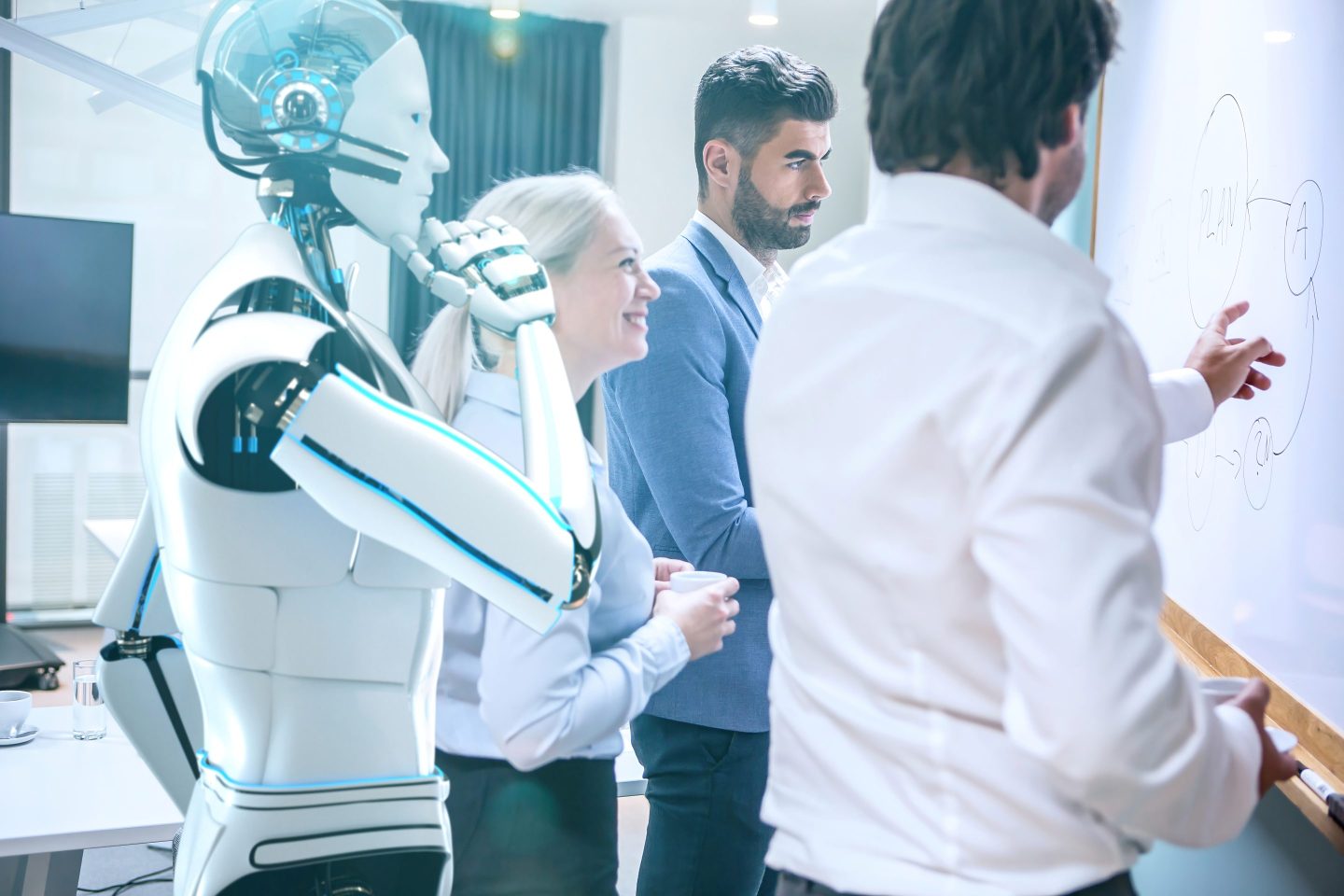
My experience over the past five years has centered on integrating artificial intelligence into various creative domains, from marketing content generation to initial product design ideation. What started as experimentation with early AI models has matured into a structured methodology for building effective Hybrid Human-AI Creative Workflows. The goal isn’t to replace human ingenuity, but to augment it, allowing creative teams to produce higher quality work faster, explore more options, and focus their unique human skills where they matter most – on strategy, empathy, and final curation.
Key Takeaways
- Human-AI collaboration is about augmentation, not replacement: AI serves as a powerful co-pilot, handling repetitive tasks and generating variations, while humans provide strategic direction, emotional intelligence, and ethical oversight.
- Structured workflows are crucial for efficiency: Clearly defined hand-off points and iterative loops between human input and AI output prevent chaos and maximize productivity.
- Prompt engineering is a core new skill: Learning to effectively communicate intent to AI tools directly impacts the quality and relevance of their creative output.
- Measurement goes beyond output volume: Success should be gauged by metrics like originality, emotional resonance, user engagement, and the efficiency gains in the creative process.
- Ethical considerations are paramount: Ensuring fairness, mitigating bias, and maintaining intellectual property rights are non-negotiable aspects of any hybrid workflow.
- Continuous learning and adaptation are essential: The AI landscape evolves rapidly, requiring teams to constantly update their skills and toolsets to stay competitive.
Setting the Foundation for Hybrid Human-AI Creative Workflows
Establishing a robust framework for blending human and AI capabilities is fundamental. In my work, this begins with clearly defining the roles of each component. Humans are responsible for the strategic vision, understanding audience nuances, setting creative briefs, and providing the critical judgment to refine and approve outputs. AI, on the other hand, excels at generating a multitude of initial ideas, performing rapid prototyping, drafting preliminary text, or creating variations based on specific parameters. We often start by identifying tasks within a traditional creative process that are repetitive, time-consuming, or require extensive iteration. These are prime candidates for AI assistance.
A crucial early step involves selecting the right AI tools for the job. Not all AI is created equal, and specialized models for text, image, or code generation yield better results. For instance, a marketing team might use generative AI for ad copy suggestions and image generation for mock-ups, while a product design team could leverage AI for brainstorming UI layouts or generating material textures. The real-world lesson here is that a tool’s capabilities must align perfectly with the specific creative challenge, avoiding a one-size-fits-all approach. This foundation minimizes friction later on, allowing for smoother collaboration.
Practical Approaches to AI-Assisted Creativity
The heart of effective hybrid creativity lies in the iterative loop between human and AI. Our teams adopt a “prompt, generate, refine” methodology. A human creative provides a detailed prompt, setting the context, desired style, and specific constraints. The AI then generates initial concepts, drafts, or visual elements. The human creative reviews this output, offering specific feedback or refining the prompt for another iteration. This cycle continues until the output meets the human’s creative standard. For example, a writer might prompt an AI for five different headline options for a blog post, then select the best one to further develop with human input, adding unique voice and emotional depth.
Another practical method involves using AI for rapid ideation and exploration. Instead of spending hours brainstorming a limited number of concepts, AI can produce dozens, even hundreds, of variations in minutes. This expansive ideation phase allows human creatives to then curate, combine, and iterate on the most promising ideas, rather than spending their time generating the initial pool. This approach significantly accelerates the creative process, freeing up human talent for higher-level strategic thinking and emotional storytelling. In content design, AI can quickly suggest layouts or color palettes, allowing designers to focus on user experience and brand consistency.
Measuring Success in Hybrid Human-AI Creative Workflows
Evaluating the effectiveness of Hybrid Human-AI Creative Workflows requires moving beyond simple output metrics. While increased volume or speed are immediate benefits, true success encompasses qualitative improvements. We track metrics such as originality, the uniqueness of the generated ideas compared to conventional approaches, and emotional resonance, how well the output connects with its intended audience. User engagement metrics, like click-through rates for AI-assisted ad campaigns or time spent on pages designed with AI input, provide tangible evidence of impact. Internally, efficiency gains are also measured, such as reduced time-to-market for new creative assets or lower production costs.
A key part of our measurement strategy involves A/B testing outputs generated purely by human teams against those produced through hybrid workflows. This helps us objectively compare quality, performance, and audience reception. Feedback loops are integrated throughout the process, gathering input from internal stakeholders and external audiences. This continuous data collection allows for constant refinement of prompts, tools, and the overall workflow, ensuring ethical considerations are met and biases are minimized. This data-driven approach means we’re not just guessing what works; we’re proving it.
Future Directions for Hybrid Human-AI Creative Workflows
The evolution of AI technology promises even more sophisticated collaborations. My outlook is that future Hybrid Human-AI Creative Workflows will feature AI models that are more context-aware, capable of understanding nuanced creative briefs and even adapting their style based on historical feedback. This shift will require creative professionals to hone their skills in prompt engineering and critical evaluation. The demand for those who can effectively “direct” AI will only grow. Expertise in understanding AI’s capabilities and limitations will become as crucial as traditional creative talents.
Industries across the board, particularly in the US, are already seeing significant shifts. Advertising agencies are using AI for dynamic ad generation, architectural firms for initial spatial planning, and entertainment studios for early concept art. The challenge ahead involves integrating these rapidly evolving tools seamlessly into existing organizational structures and fostering a culture of continuous learning. Future success in creativity will not be about human versus AI, but rather about the most effective ways humans and AI can collaborate to push the boundaries of what’s possible, creating truly innovative and impactful work.